# Install Dashboard

### Install Dashboard

### Login to Grafana

Login to Grafana at [http://127.0.0.1:3000/](http://xxx.xxx.xxx.xxx:3000/), replacing `127.0.0.1` with the IP address of your Grafana instance.

If this is your first time logging in to Grafana, use the default username `admin` and the default password `admin`. Grafana will ask you to set a new password.

### Configure Prometheus Data Source

Connect Grafana to your Prometheus instance by configuring the Prometheus Data Source in Grafana.

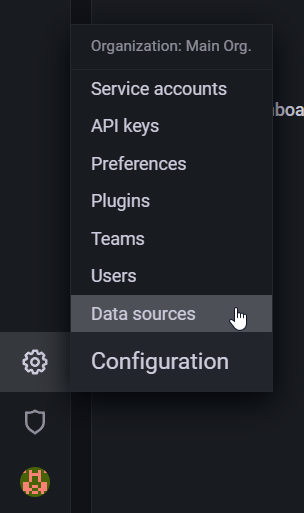
On Grafana's left-hand menu, hover over the gear menu and click on Data Sources.

<figure><img src="https://971382438-files.gitbook.io/~/files/v0/b/gitbook-x-prod.appspot.com/o/spaces%2FZON6xeJcH6NDhbzjDAWf%2Fuploads%2Fgit-blob-5f1c05df196fd17b235e941d9d6b4c89fdb4d41d%2Fgrafana-data-sources.png?alt=media" alt=""><figcaption><p>Select Data Sources</p></figcaption></figure>

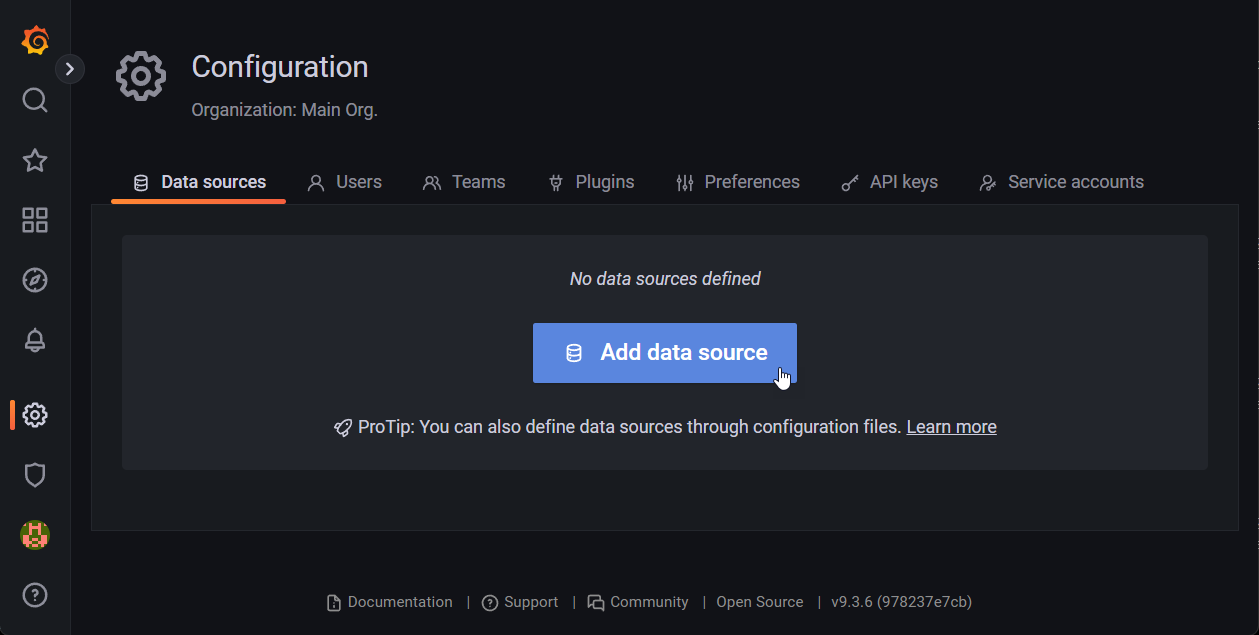
Then click on the Add Data Source button.

<figure><img src="https://971382438-files.gitbook.io/~/files/v0/b/gitbook-x-prod.appspot.com/o/spaces%2FZON6xeJcH6NDhbzjDAWf%2Fuploads%2Fgit-blob-a957c5f2dec586770d2586fc7b9615e0746add1b%2Fgrafana-add-data-source.png?alt=media" alt=""><figcaption><p>Click on Add Data Source</p></figcaption></figure>

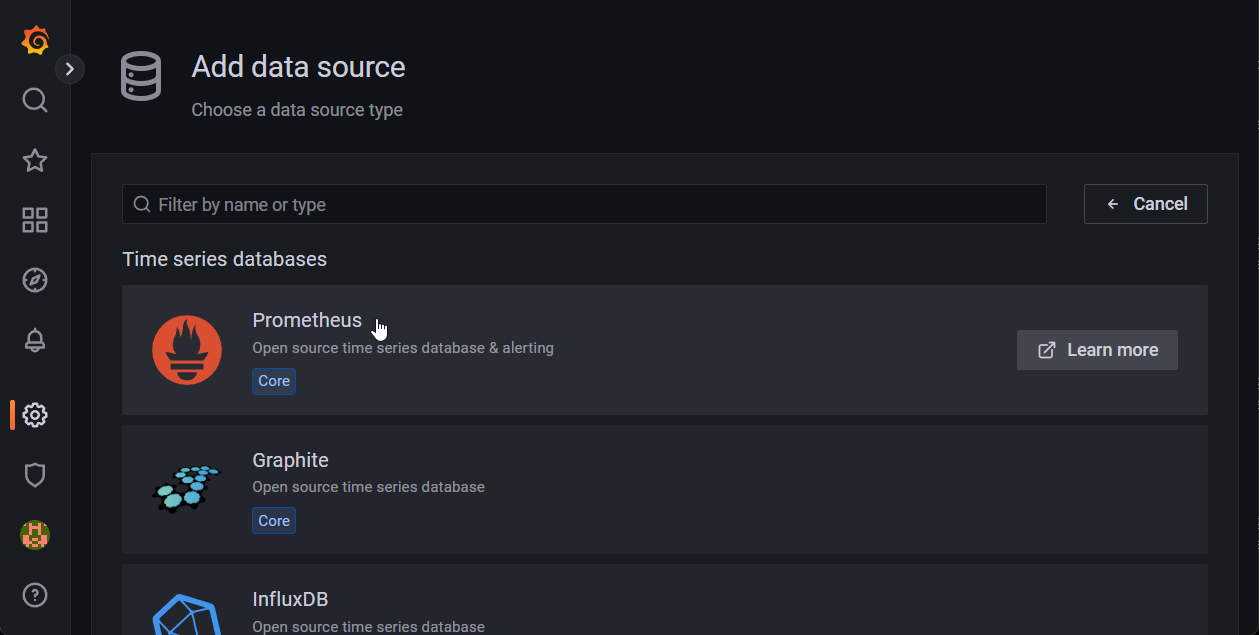
Click on Prometheus under "Time series databases".

<figure><img src="https://971382438-files.gitbook.io/~/files/v0/b/gitbook-x-prod.appspot.com/o/spaces%2FZON6xeJcH6NDhbzjDAWf%2Fuploads%2Fgit-blob-ee6a22af9c3f35cd09d17be4f45125845a35026c%2Fgrafana-add-prometheus.png?alt=media" alt=""><figcaption><p>Select the Prometheus panel</p></figcaption></figure>

Enter `http://127.0.0.1:9090/` into the URL field. If your Prometheus instance is accessible at a different IP address or port, update those here. Otherwise, click on the Add Data Source button.

<figure><img src="https://971382438-files.gitbook.io/~/files/v0/b/gitbook-x-prod.appspot.com/o/spaces%2FZON6xeJcH6NDhbzjDAWf%2Fuploads%2FaZVNa7KqnKORiXH16OlD%2Fgrafana-data-source-prometheus.png?alt=media&#x26;token=511fcca0-b0ab-4e3f-ae6f-c93dceac0d31" alt=""><figcaption><p>Enter the URL to your Prometheus instance</p></figcaption></figure>

Click Save & Test.

<figure><img src="https://971382438-files.gitbook.io/~/files/v0/b/gitbook-x-prod.appspot.com/o/spaces%2FZON6xeJcH6NDhbzjDAWf%2Fuploads%2FKGLrLDQl7C0wIKTOngpF%2Fgrafana-save-test.png?alt=media&#x26;token=63548c7f-488c-46d0-9478-66714634ab62" alt=""><figcaption><p>Save and test the connection</p></figcaption></figure>

Grafana should report that the data source is working.

#### **Install Grafana Dashboard**

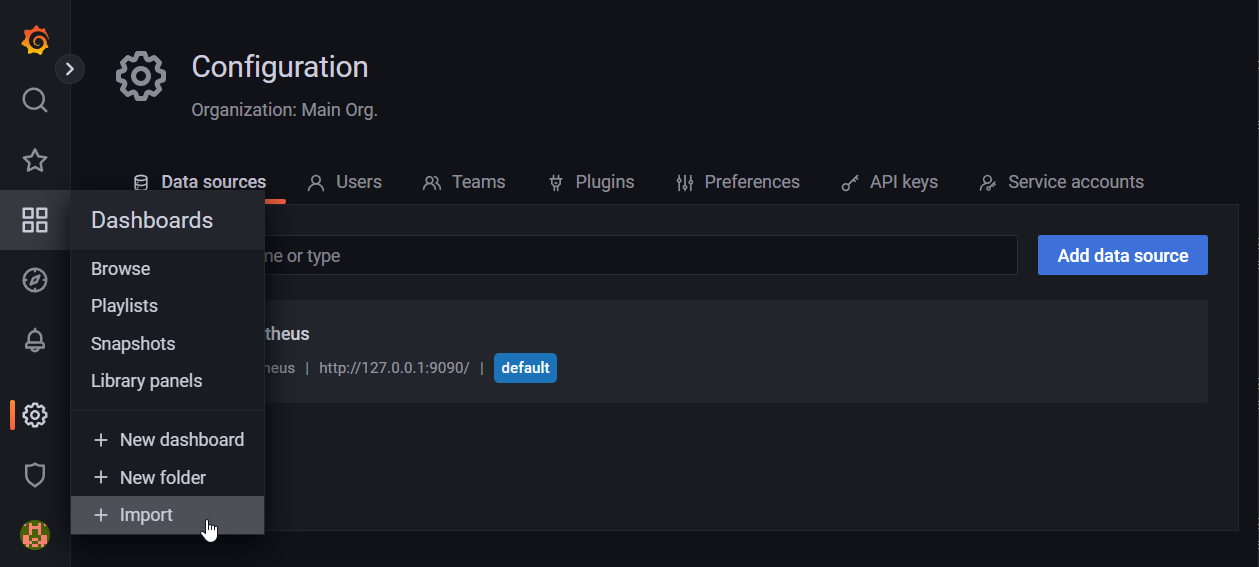
Hover over the Dashboards menu in Grafana's left-hand menu, then click on Import.

<figure><img src="https://971382438-files.gitbook.io/~/files/v0/b/gitbook-x-prod.appspot.com/o/spaces%2FZON6xeJcH6NDhbzjDAWf%2Fuploads%2Fgit-blob-c33411147f8aea4bf26bf43a288cddbff7f4a478%2Fgrafana-import-dashboard.png?alt=media" alt=""><figcaption><p>Click on the Import menu option</p></figcaption></figure>

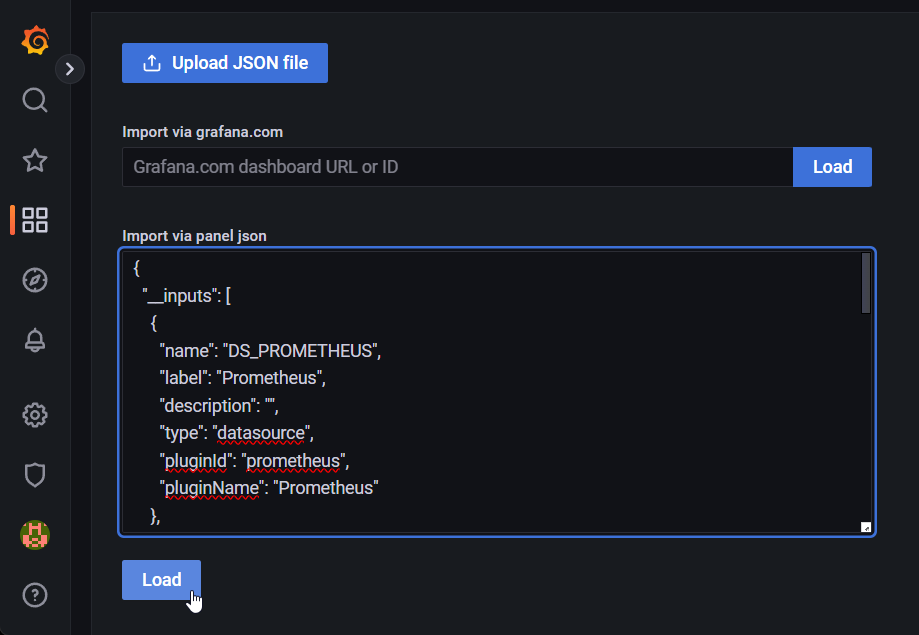
Copy and paste the dashboard at into the "Import via panel json" text box on the screen.

[Dashboard JSON via GitHub](https://raw.githubusercontent.com/stakelocal/stakelocal-dashboard/main/dashboard/stakelocal-dashboard.json)

It is also available in the cloned Stake Local Dashboard GitHub repository at `~/git/stakelocal-dashboard/dashboard/stakelocal-dashboard.json`.

```bash
cat ~/git/stakelocal-dashboard/dashboard/stakelocal-dashboard.json
```

Then click the Load button.

<figure><img src="https://971382438-files.gitbook.io/~/files/v0/b/gitbook-x-prod.appspot.com/o/spaces%2FZON6xeJcH6NDhbzjDAWf%2Fuploads%2Fgit-blob-1653a33b8c3a2e730de52d0f4e1fea9376a33c9a%2Fgrafana-load.png?alt=media" alt=""><figcaption><p>Paste the JSON and click on the Load button</p></figcaption></figure>

Select your Prometheus data source in the Prometheus field.

<figure><img src="https://971382438-files.gitbook.io/~/files/v0/b/gitbook-x-prod.appspot.com/o/spaces%2FZON6xeJcH6NDhbzjDAWf%2Fuploads%2Fgit-blob-9acae1052fdad3c4c3465673cb7c4d9aea5133af%2Fdashboard-data-source.png?alt=media" alt=""><figcaption><p>Select the Prometheus data source</p></figcaption></figure>

Optionally change the Currency Code value to one of the supported currencies: USD, EUR, JPY, GPB, AUD, CAD, CHF, CNY, HKD, NZD, ILS, KRW, MXN, RUB, SGD, TWD, or INR.

<figure><img src="https://971382438-files.gitbook.io/~/files/v0/b/gitbook-x-prod.appspot.com/o/spaces%2FZON6xeJcH6NDhbzjDAWf%2Fuploads%2Fgit-blob-9d5e845ac42a8a152f9241e98578edae2a77405e%2Fdashboard-currency-code.png?alt=media" alt=""><figcaption><p>Modify the currency variable</p></figcaption></figure>

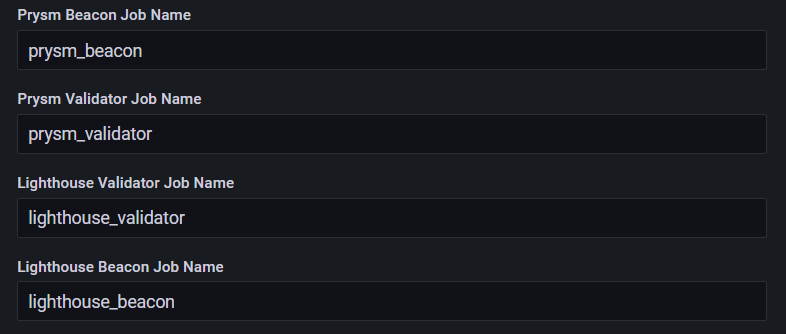
If you used the [Optional: Alternative Dashboard Compatibility](https://docs.stakelocal.io/dashboard-installation/optional-alternative-dashboard-compatibility) instructions to change the default Stake Local Prometheus `job_name` to another value for Lighthouse or Prysm, you must update the job names on this screen. Update the `Prysm Beacon Job Name`, `Prysm Validator Job Name`, `Lighthouse Beacon Job Name`, and `Lighthouse Validator Job Name` variables to match your new `job_name` values, if applicable.

<figure><img src="https://971382438-files.gitbook.io/~/files/v0/b/gitbook-x-prod.appspot.com/o/spaces%2FZON6xeJcH6NDhbzjDAWf%2Fuploads%2Fgit-blob-ffbabc41bcabc6f918ddba702426fec7d09b5cee%2Fdashboard-job-names.png?alt=media" alt=""><figcaption><p>Change Lighthouse and Prysm job names for dashboard compatibility</p></figcaption></figure>

Click the Import button.

The dashboard should appear and data should begin to populate. Some data may take additional time to populate, from an epoch to two hours.

{% hint style="success" %}
Congratulations, you have set up the Stake Local Dashboard.
{% endhint %}


---

# Agent Instructions: Querying This Documentation

If you need additional information that is not directly available in this page, you can query the documentation dynamically by asking a question.

Perform an HTTP GET request on the current page URL with the `ask` query parameter:

```
GET https://docs.stakelocal.io/dashboard-installation/install-dashboard.md?ask=<question>
```

The question should be specific, self-contained, and written in natural language.
The response will contain a direct answer to the question and relevant excerpts and sources from the documentation.

Use this mechanism when the answer is not explicitly present in the current page, you need clarification or additional context, or you want to retrieve related documentation sections.